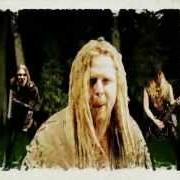




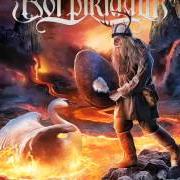
Osmotar, the father of beer
he walked to the edge of the fields.
The barley had come from Pellonpekko.
Thus the barley was added to beer.
Osmotar he rubbed his hands.
So he rubbed the time after time.
Thus the animals had come to life -
those fetchers of the seasonings.
He got the sap and he got spruce sprouts.
Those he had fetched from the woods.
That's how Osmotar prepared the beer
out of hops and barley.
But the beer would not ferment
The costly ale lies still in place.
That's when the means were found by him -
By Osmotar, the god of beer.
Get the predator's saliva
Then he followed the instructions.
So he fetched the bear's saliva.
It was time for the beer to ferment -
the dark proper beer so fragrant.
Thus a toast was made to Ukko.
Thus the pints of beer were raised.
The holiest drink of them all
which is called the sap of the gods.
Korpiklaani ist eine finnische Folk-Metal-Band, die 1996 in Lahti gegründet wurde und ursprünglich bis 2003 unter dem Namen Shaman bekannt war. Der Name Korpiklaani, was wörtlich „der Waldclan“ bedeutet, spiegelt den folkloristischen Einfluss und die Verbindung zur Natur wider, die in ihrer Musik präsent sind. Die Band ist für ihren energiegeladenen und melodischen Sound bekannt, der traditionelle finnische Elemente wie A-cappella-Gesang und Folk-Instrumente wie das Kantele mit Heavy-Metal-Gitar riffs und kraftvollem Schlagzeug verbindet. Zu den bekanntesten Songs gehören „Runo“, „Tulen alla“ und „Vodka“. Korpiklaani hat zahlreiche Alben veröffentlicht, darunter „Tales from the Wild Hunt“ (2003), „Spirit of the Forest“ (2006) und „Manowar of the Forest“ (2017). Die Band gilt als eine der einflussreichsten im finnischen Folk-Metal und trägt zur Verbreitung traditioneller finnischer Musik auf der ganzen Welt bei.

 Kotipelto
 Minerva
 Callisto
 Satanic Warmaster
 Ajattara
 Tiktak
 Insomnium
 Poisonblack
 Turisas
 Lordi
 Pain Confessor
 Gandalf