





To the misanthropic misbegotten merchants of gloom
Who look into their crystal balls and prophesied our doom:
“Let the death knell chime, its the end of time”
Let the cynics put their blinkers on and toast our decline.
Don't become demoralized by scurrilous complaint,
Its a sure sign that the old world is terminally quaint.
And tomorrow’s gonna be a better day,
No matter what the siren voices say
Tomorrow’s gonna be a better day,
We’re going to make it that way.
To the pessimistic populists who harbor no doubt,
That everything we make our way, “to hell in a hand cart”.
To the snarky set, who’s sniping to get,
Anyone who puts their head above the parapet.
Don't become disheartened baby, don't be fooled,
Take it from someone who knows the glass is half full.
And tomorrow’s gonna be a better day,
No matter what the siren voices say.
Tomorrow’s gonna be a better day,
E're gonna make it that way.
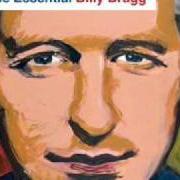
Billy Bragg ist ein britischer Singer-Songwriter, Gitarrist und Aktivist, geboren 1957 in Barking, Essex. Seine Musik kombiniert Elemente aus Folk, Punk und Soul mit politisch und sozial engagierten Texten, die der Tradition der Protestmusik entsprechen. Bragg begann seine musikalische Karriere in den 1980er Jahren und wurde von Künstlern wie Woody Guthrie und Bob Dylan beeinflusst. Sein direkter Stil und seine prägnanten Songs haben ihm ein breites Publikum beschert und ihn zu einem der wichtigsten britischen Singer-Songwriter gemacht. Zu seinen bekanntesten Alben gehören "Brewing Up a Storm" (1986), "Talking with the Taxman About Poetry" (1989) und "Mermaid Avenue" (1998), eine Zusammenarbeit mit Wilco und Ralph Stanley, die unveröffentlichte Songs von Woody Guthrie neu interpretiert. Bragg ist auch ein politisch aktiver Aktivist, der sich für die Rechte der Arbeiter und gegen soziale Ungerechtigkeit einsetzt. Seine Musik spiegelt stets seine Weltanschauung und sein zivilgesellschaftliches Engagement wider.

 Pariah
 The Varukers
 The Pineapple Thief
 Kemuri
 Teddy Thompson
 Rob Halford
 Saint Etienne
 Godley & Creme
 Danny Peck
 Wham!
 Chris Lake
 King Crimson